 WeMates
 Case study · Colegio Mayor de Oviedo
Salamanca · 2026-27 academic year
Room allocation stopped being done by hand
In July 2026, the Colegio Mayor de Oviedo asked us to allocate the rooms of 278 students. This page explains what was there before, what each side did, what data we allocated with and what the result was.
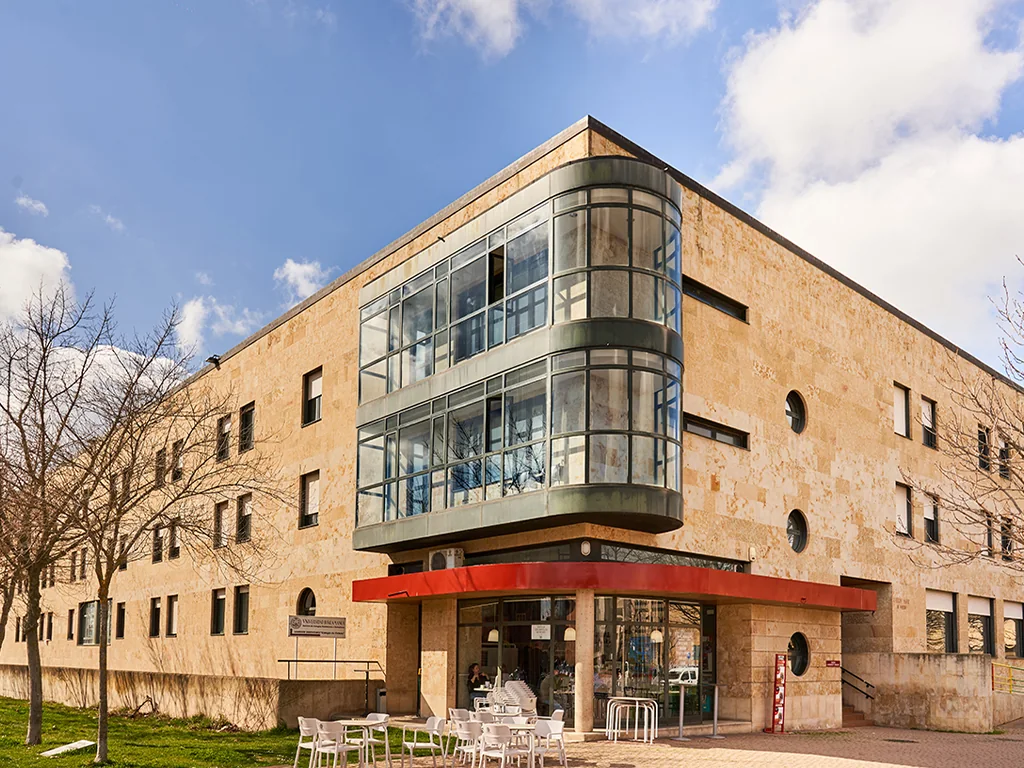
- Institution
- Colegio Mayor de Oviedo
- University
- Salamanca
- Students allocated
- 278
- Allocation date
- 22 July 2026
The starting point
Until last year, the Colegio Mayor de Oviedo allocated its rooms by hand. A list of admitted students, a list of rooms, and the team deciding one by one who would go in which room and with whom.
To pair people up they used what they could see on each student's file: same degree, same province, similar age. Those are the only clues a file gives, and none of the three says anything about what time someone goes to bed, how much noise they make while studying or whether they tidy up after themselves.
The cost of that method always showed up at the same point in the calendar. Luis Miguel Sánchez-Gil, director of the Colegio Mayor, and Pablo Ramos Hernández, deputy director, told us that room change requests cluster in the first fifteen days after the allocations are published: that is when each student finds out who they will be living with for the whole year.
And handling one of those requests is more than correcting a line in a spreadsheet. It means sitting down with someone who feels uncomfortable in the place they live, finding a free room that also suits them, and often moving a third person to free it up. All of it in the two weeks when the team is managing the arrival of several hundred residents.
What the Colegio Mayor needed
What it needed was easy to state: finish the allocation on time, without breaking any of the rules it already had, and with a better criterion than how alike two files looked on paper.
The rules were non-negotiable and had to survive the change:
- Returning residents, those staying on at the Colegio Mayor for another year, keep their room, and that limits who can fill the other bed.
- Anyone arriving with a roommate of their choice, whether siblings, friends or people from the previous year, stays together, and the allocation cannot split them up.
- Double rooms are formed within the same gender.
- The building is filled in a specific floor order, decided by the Colegio Mayor.
- Nobody is left without a room along the way.
There was also a placement problem, separate from pairing. The management had documented that in previous years conflicts didn't only happen between roommates: they also happened between neighbours in single rooms, because the building's sound insulation is limited. An early riser could end up in the room next to someone who stays up late, without either of them sharing a room with anyone.
That is why in Oviedo we allocated more than the doubles. We also placed the single rooms, deciding which student goes in which room number instead of handing them out in list order.
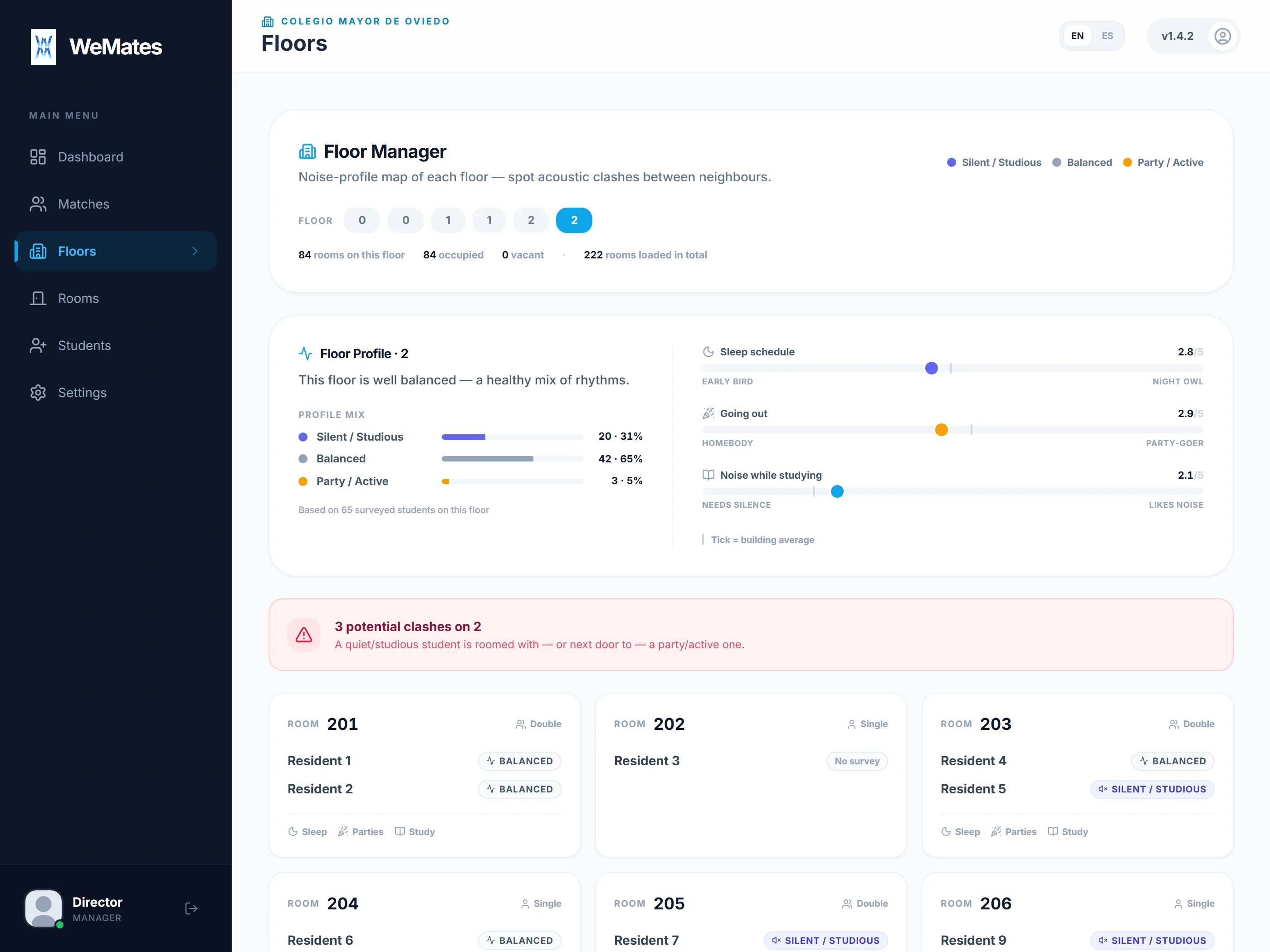
Those conflicts fall in the same fifteen-day window as the ones between roommates, and are resolved the same way: by moving residents.
What each side did
The allocation wasn't something handed over and forgotten: half a dozen decisions belonged to the Colegio Mayor and had to be made before the engine could run. This is how the work was shared out in the 2026-27 academic year.
The Colegio Mayor
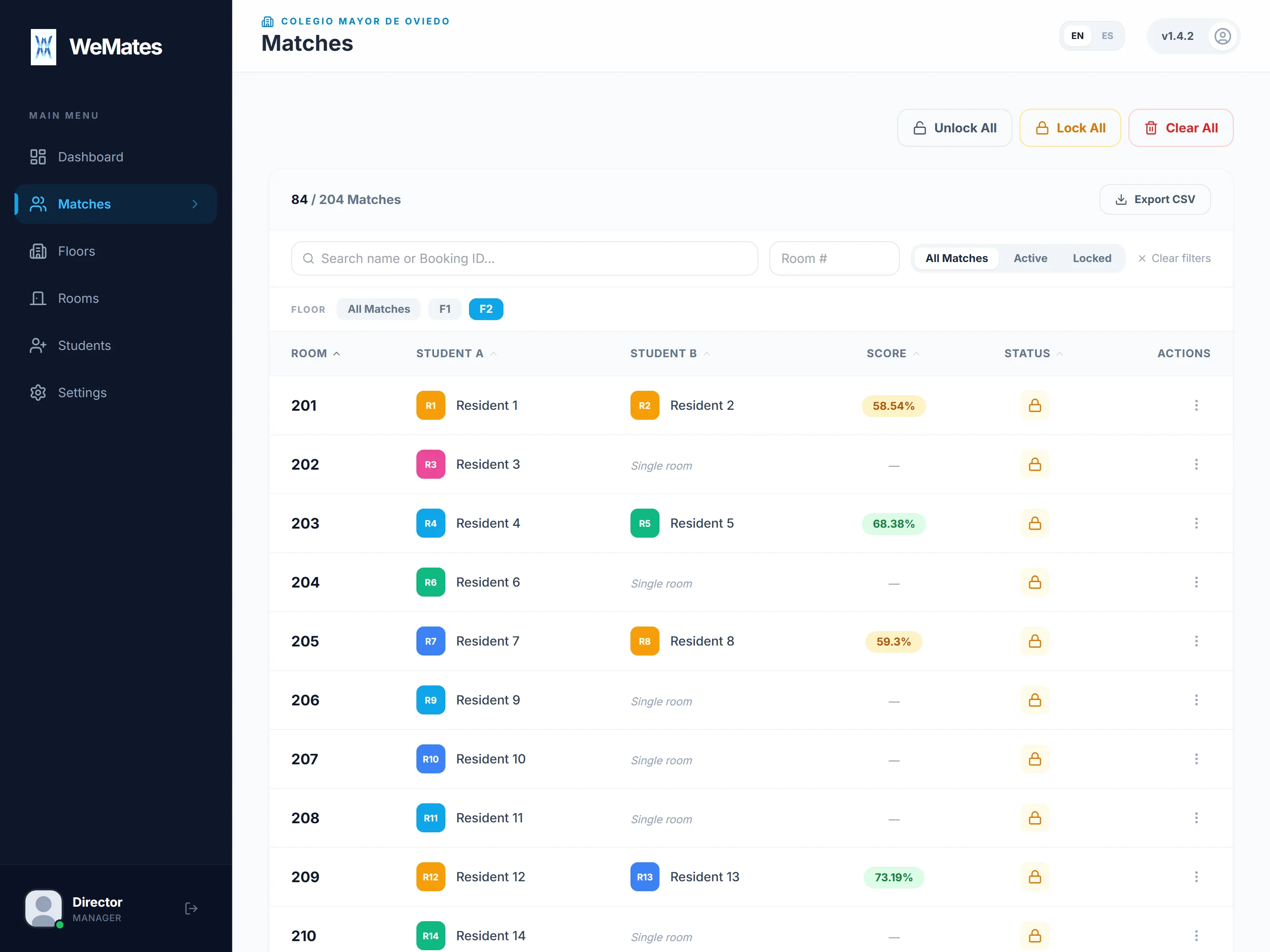
- Loaded the building's room list, with each room's floor, from the plans it already had.
- Generated a code for each student from the dashboard and handed them out.
- Flagged the returning residents and locked each one's room.
- Flagged the existing pairs that had to stay together.
- Set the floor order and which room types went into the allocation.
- Decided when to run the allocation, and ran it.
The Colegio Mayor's team did all of it from the dashboard, with no intermediate spreadsheets and no files sent back and forth by email.
WeMates
- Set up the Colegio Mayor's account and helped load the building.
- Launched the survey and dealt with students' issues while it was open.
- Ran the allocation within the Colegio Mayor's five rules.
- Checked the result student by student against the database before signing it off.
- Left the allocation locked, so that no later run could overwrite it by accident.
The Colegio Mayor stays in control: it can change any of our assignments by hand in the dashboard, before or after the allocation.
The result
83% of the students arriving new at the Colegio Mayor answered the survey. For them, what was at stake was concrete: their answers would decide who they shared a room with for the whole year.
It wasn't just one more piece of move-in paperwork, and the residents of the Colegio Mayor de Oviedo didn't treat it as one. Answering was their only way to have a say in a decision that until then had been made without them.
We ran the allocation on 22 July 2026.
Before signing it off we checked, query by query against the database, that we had met everything the Colegio Mayor had asked for:
- Every returning resident, in the same room.
- Every existing pair, together.
- All double rooms, within the same gender.
- The locked rooms, left empty.
- The floor order, respected.
- A single assignment per student, with no duplicates.
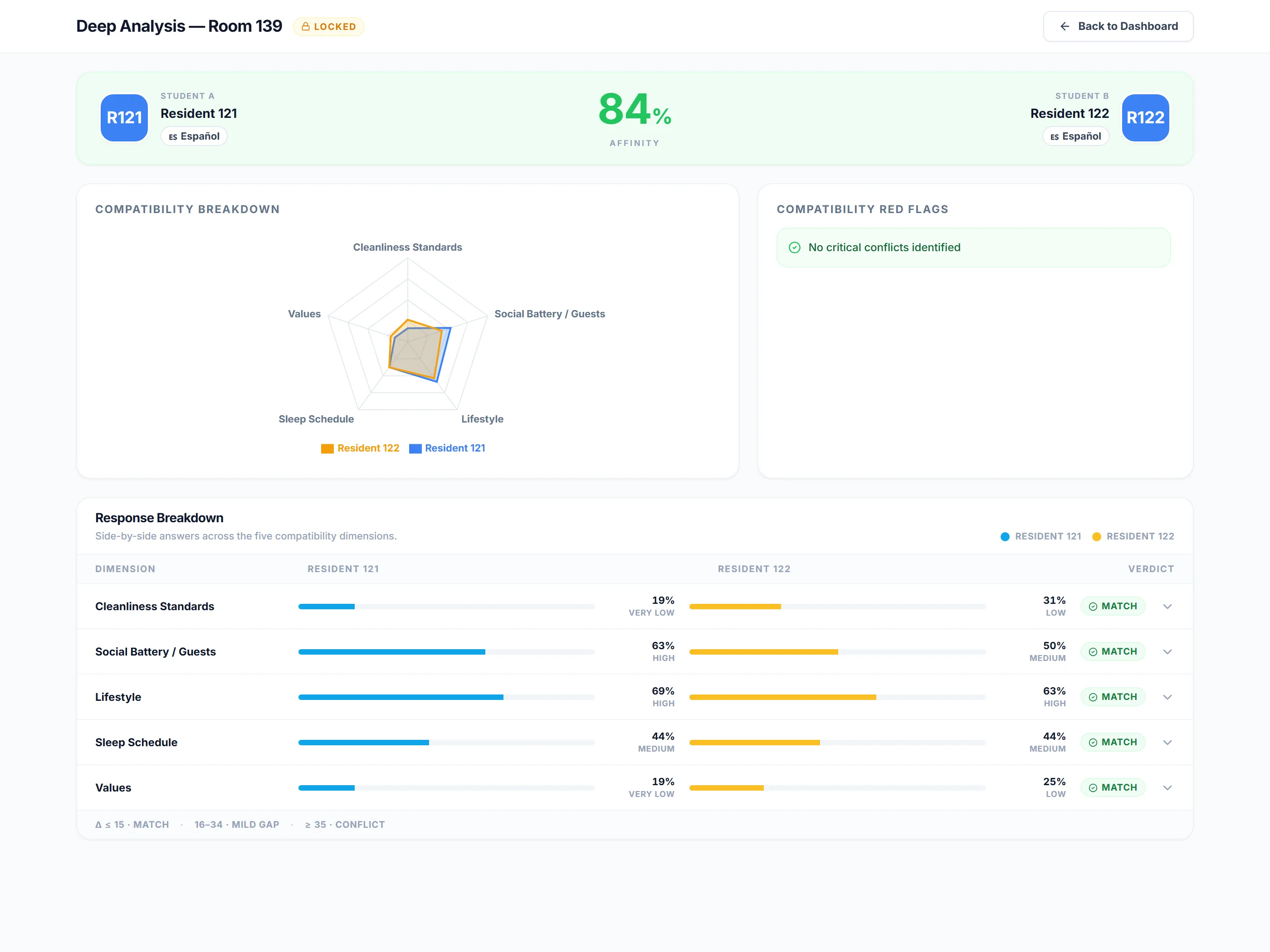
Those six were checked one by one against the database. The engine placed the single rooms by their neighbours in the same run, but that placement wasn't verified student by student like the rest.
What comes next
Most of the work the Colegio Mayor did in July was a one-off. The building is now in the system: its rooms, their numbers, its floors and the order in which they fill up are kept from one year to the next. What changes every year is the students, not the building.
For the 2027-28 academic year, the Colegio Mayor's part comes down to generating codes for the new intake, flagging who is returning and who is arriving with a roommate of their choice, and deciding when to run the allocation. Loading the building, the most laborious part, doesn't have to be done again.
And there is an advantage that builds up. Of the 146 returning residents, 58 have already answered the survey this year. When a returning resident is in a double room and a bed is free, knowing how they live makes it possible to choose them a compatible roommate instead of placing someone next to them blind. Those profiles are already stored and will still be there next year.
Nor did the pilot end on 22 July. We keep working with the Colegio Mayor's management throughout the year, and what we observe this year is what will refine the next allocation.
An allocation is judged by whether there is a second one.
Sometimes you put two people together and it goes fine, they get on politely, and during the year they don't ask for a room change or have any problems. But maybe, if they had been matched with richer data, you would have found a better person for each of them. And maybe you'd get two friends out of those roommates.
 Pablo Ramos Hernández
Deputy director of the Colegio Mayor de Oviedo ·
interview from March 2026, before the first allocation · translated from Spanish